
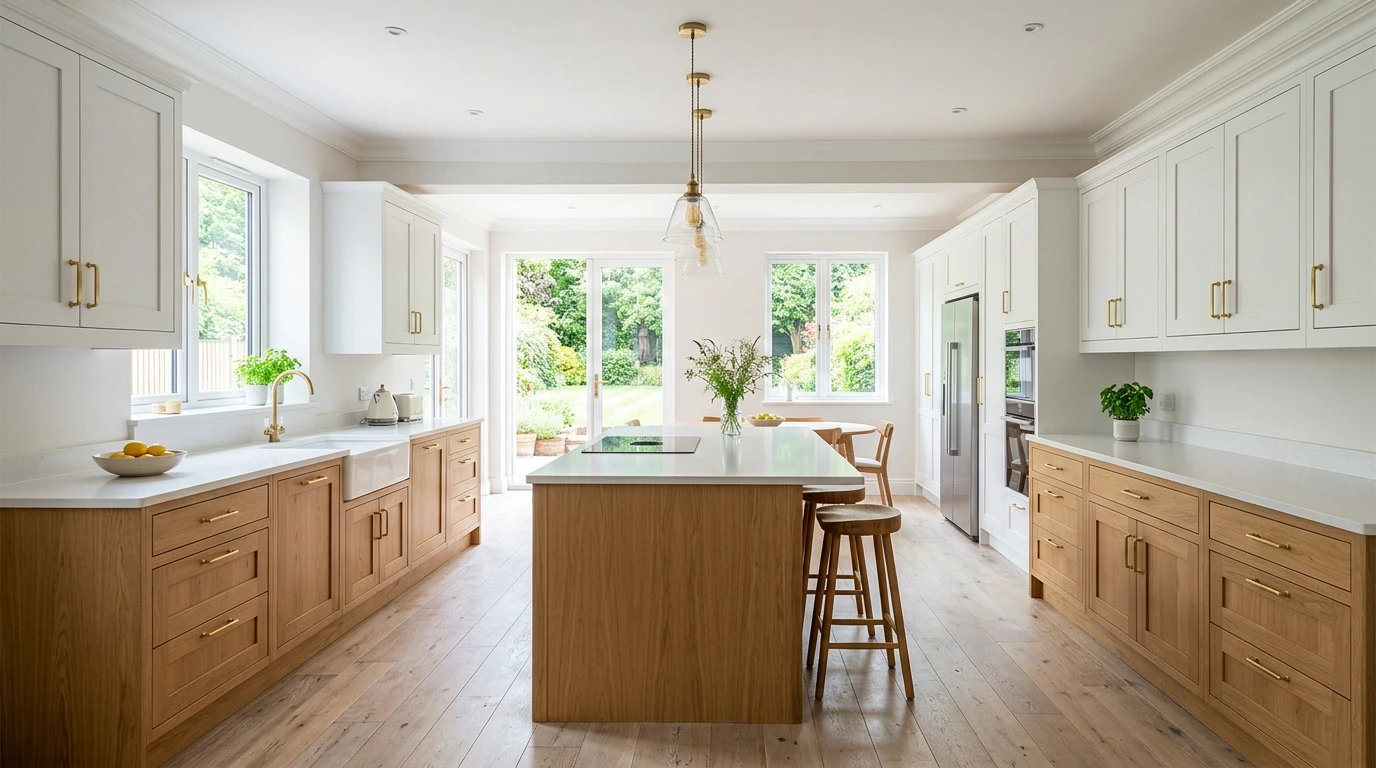
The Ultimate Guide to Kitchen Door Styles
5 June 2026 · Ally
You know the feeling. You walk into your kitchen, glance at the doors, and think I really need to do something about this. The colour feels dated, the fronts are a little tired, and somewhere along the way the room stopped feeling like yours. You don't want a whole new kitchen - you only want it to feel right again.
The good news is that new doors can transform a kitchen completely. The slightly daunting part is everything that comes next, because the moment you start looking, you're met with a wall of choice. Shaker, slab, in-frame, gloss, matt, handleless - the words pile up quickly, and it's easy to come away no clearer than when you started.
This guide is here to change that. We'll walk through the main kitchen door styles one by one, in plain language, so that by the end you'll know exactly what each one is, who it tends to suit, and which direction feels like you. There's no wrong answer here - only the style that's right for your home.
Where kitchen door styles actually begin
Before we look at individual styles, it helps to know that the look of a door comes from three things working together: its shape (the profile of the door front), its finish (whether it's smooth, textured, gloss or matt), and its colour. Most people start with shape, because that's what gives a kitchen its overall character - traditional, modern, or something in between. So that's where we'll start too.
The reassuring thing is that there are really only a handful of core door styles to understand. Once you've got those, every option you come across is a variation on one of them.
The Shaker door
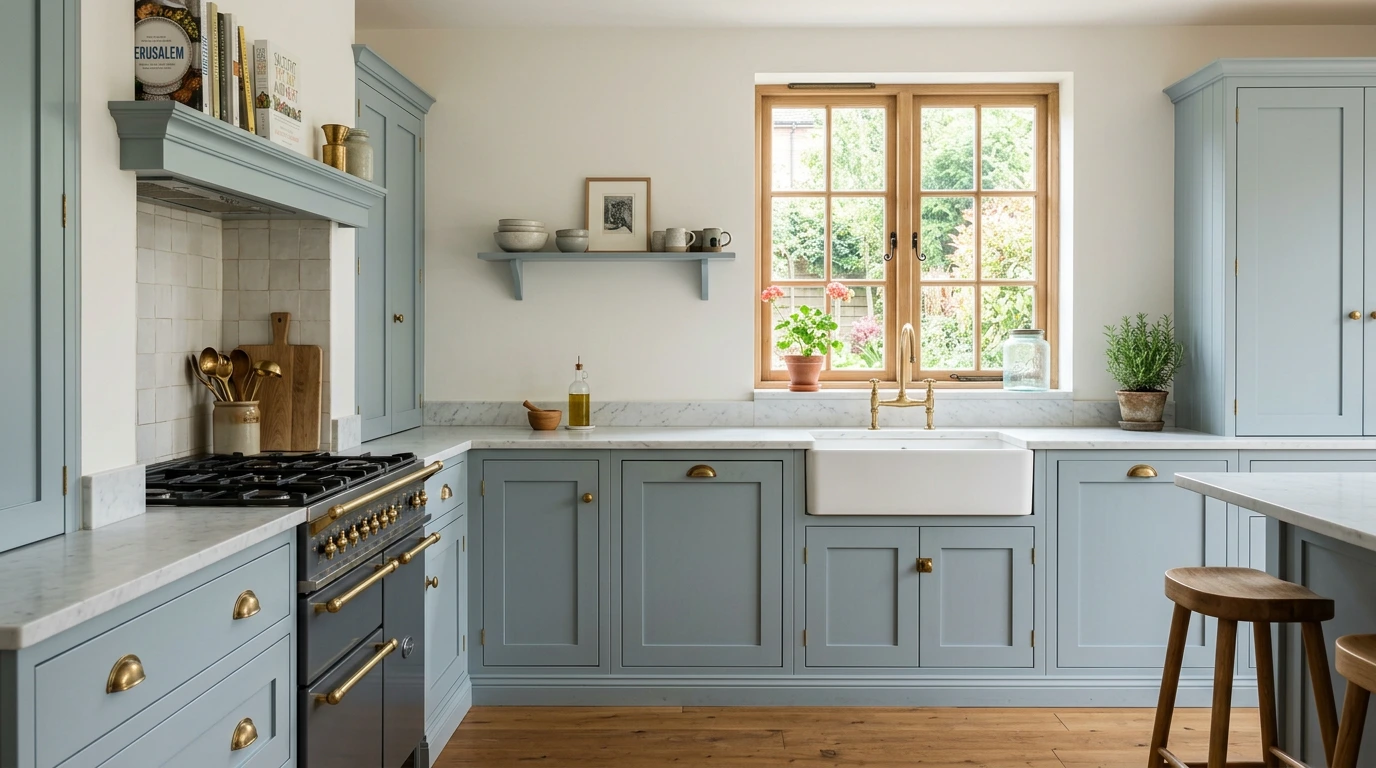
If there's a style that almost everyone recognises, it's the Shaker. You'll spot it by its simple five-piece construction: a flat recessed centre panel framed by four straight, clean edges. No fuss - nothing but balance. This can be constructed from separate pieces, or one solid piece, made to look like separates. Either way, the design is the same.
The reason the Shaker has stayed so popular for so long is that it sits comfortably in almost any home. In a soft sage or muted blue it feels classic and calming. In crisp white it reads fresh and modern. Paired with brass handles it leans country; with sleek black ones it turns contemporary. It's the chameleon of kitchen door styles, which is exactly why so many people land on it.
Tends to suit: anyone who wants a look that feels timeless rather than trend-led, and who isn't sure whether they lean traditional or modern. The Shaker happily does both.
The slab (flat-fronted) door
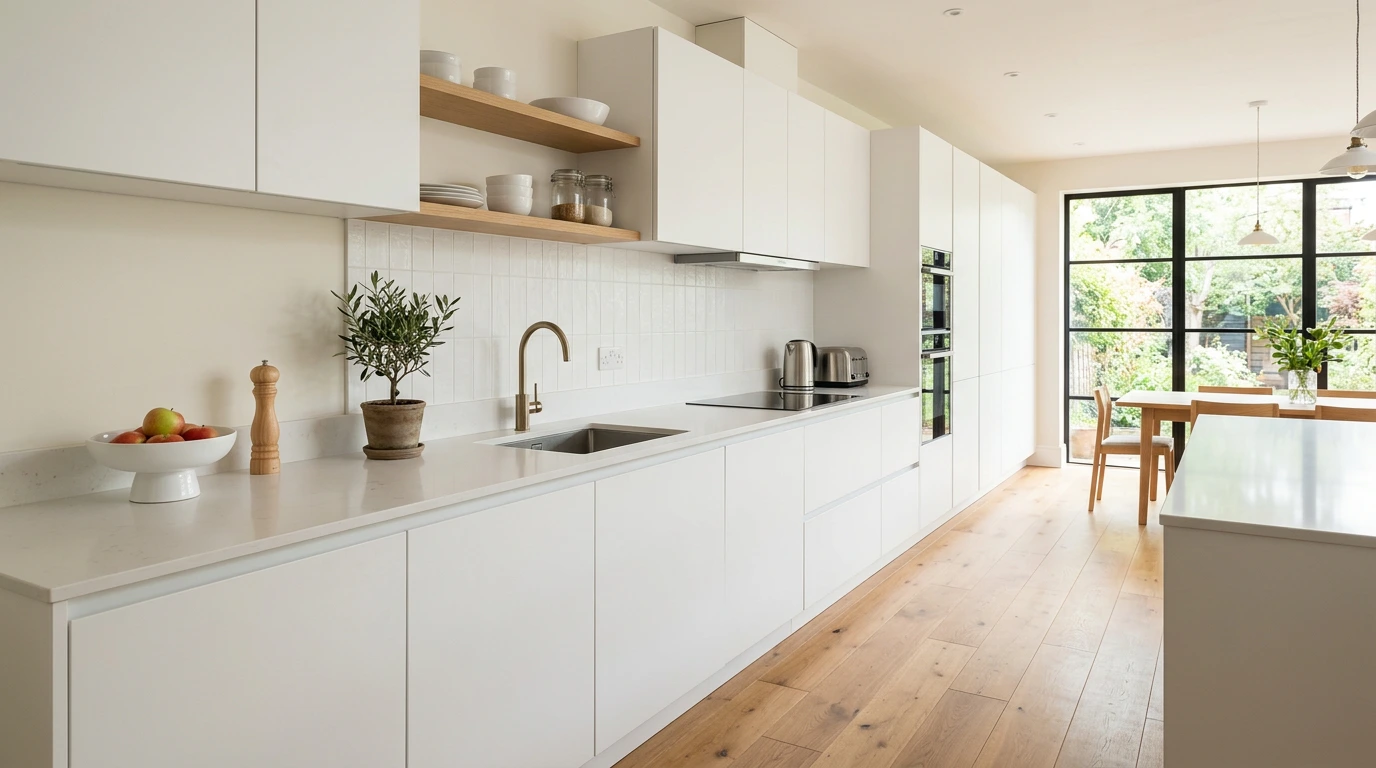
At the other end of the spectrum is the slab door - sometimes called a flat or flat-fronted door. It's exactly what it sounds like: a single, smooth, unbroken surface with no frame and no panel.
Slab doors are the foundation of the modern kitchen. Because there's nothing to interrupt the surface, the finish does all the talking, whether that's a high-gloss white that bounces light around a small kitchen, a warm woodgrain that adds texture, or a deep matt colour that feels calm and architectural. They're also the natural partner for a handleless look, where the simplicity of the door is the whole point.
Tends to suit: anyone drawn to clean lines and minimalism, those working with a smaller or lighter kitchen who want to keep it feeling open, and anyone who loves the idea of colour or finish being the star.
The in-frame door
The in-frame door is where things get a little more characterful. Rather than sitting on the front of the cabinet, the door is set within a visible frame, so the cabinetry itself becomes part of the look. The result is a kitchen with real depth and craftsmanship - the kind that feels considered and built to last.
In-frame styling carries a more premium, heritage feel, and it's often the choice for people who already know they want quality and longevity above all else. It rewards a calmer colour palette and natural materials, and it tends to anchor a room beautifully in period and characterful homes.
Tends to suit: the careful researcher who wants something enduring, values craftsmanship, and is happy to invest in a kitchen they won't have to think about again for a long time.
Traditional and beaded doors
Between the simplicity of the Shaker and the detail of in-frame sits a family of more traditional door styles - raised-panel doors, beaded doors, and softer profiles with decorative detailing. These bring warmth and a sense of homeliness, and they sit especially well in cottages, period properties and rooms where you want the kitchen to feel lived-in and welcoming rather than sharp and minimal.
If a clean modern slab feels a touch cold to you, a more traditional door is often the missing piece. It's a style led by comfort and character.
Tends to suit: lovers of country and classic kitchens, and anyone whose home has period features they'd like the kitchen to echo.
Handleless and J-pull doors
Strictly speaking, handleless isn't a door shape - it's an approach you can apply to others, most often the slab. But it's worth knowing about, because it's one of the most distinctive looks in kitchens today. Instead of fitted handles, there are two main ways to achieve it. A genuine handleless kitchen uses a recessed rail system - often called a True Handleless InRail - built into the cabinet behind the doors and drawers, creating a continuous gap you grip from behind to open them. The other option is a J-pull, where the top edge of the front of the door itself is shaped into a curved lip for your fingers to hook into. Both give that smart, streamlined look, with no handles to interrupt the surface.
The effect is seamless and uncluttered, with long uninterrupted runs of cabinetry. It's a confident, contemporary choice that keeps the eye moving smoothly across the room.
Tends to suit: fans of modern, gallery-clean kitchens who love the idea of a continuous, fuss-free surface.
A word on finishes
Once you've found a shape you love, the finish is what brings it to life. Broadly, you'll be choosing between gloss, which reflects light and feels bright and energetic, and matt, which absorbs light for a softer, more understated look. Both are wonderful - it really comes down to the mood you want and the light your kitchen gets. You'll also find woodgrain finishes that add natural texture and warmth, and smooth painted finishes that suit Shaker and in-frame doors particularly well.
Finish is a big enough topic to deserve its own space, so if you'd like to go deeper, our guide to gloss versus matt doors is a good next step.
Colour: the easiest way to make a kitchen yours
It's worth remembering that almost any of these door styles comes in almost any colour. Soft neutrals and warm greys remain enduringly popular for the calm they bring. Sage greens, dusky blues and clay tones have become favourites for kitchens that want a little personality. And classic white never really goes anywhere. The same Shaker door can feel like three completely different kitchens depending on the colour you choose, which is a lovely thing to keep in mind: colour is often where the biggest transformation, and the most fun, lives.
How to find the style that's right for you
On the whole, there is no single best kitchen door style. There's only the one that fits your home, your taste and your budget - and every one of the styles above can be done beautifully at every price point. A vinyl-wrapped Shaker and a hand-painted in-frame Shaker can share the same silhouette and serve two very different people equally well. Neither is the ‘right’ answer in the abstract. The right answer is the one that's right for you.
When you're weighing it up, a few gentle questions tend to bring everything into focus. Does your home lean traditional or modern - or somewhere happily in the middle? How much natural light does your kitchen get, and do you want to add brightness or warmth? And what matters most to you: a timeless look, a particular colour, a quick refresh, or something built to last for decades?
You don't need to have every answer before you begin. Often, seeing the styles laid out is enough for one of them to quietly feel like home.
Ready to find yours?
Choosing a kitchen door style should be the exciting part, not the overwhelming one. Once you have a sense of the look you're drawn to, the next step is finding a supplier who does it well – with service and at a price that feels right for you.
Not sure which direction is right for you? Answer a few quick questions and we'll point you to the right place.