
Traditional vs Modern Kitchen Doors
16 June 2026 · Ally
Of all the choices in a kitchen refresh, this is the one that sets the tone for everything else. Traditional or modern? It's less a technical decision than an emotional one - it's about the feeling you want to walk into every morning. And as with every choice at Find The Right Doors, there's no better or worse here. There's only the look that's right for you and your home.
Let's explore what defines each, so the question of traditional vs modern kitchen doors starts to answer itself.
What makes a kitchen door traditional?
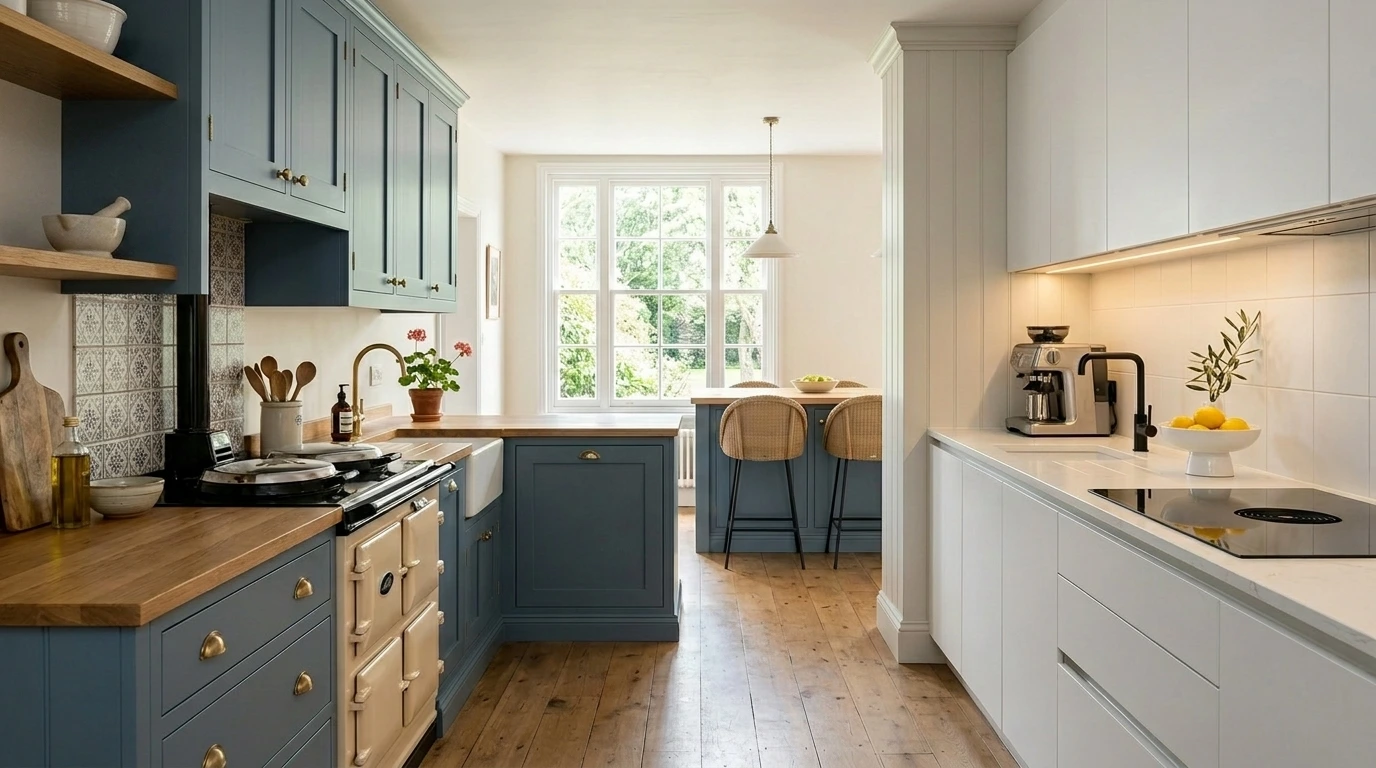
Traditional doors - the foundation of so many classic kitchen styles - are all about warmth, detail and a sense of homeliness. Think in-frame doors set within a visible cabinet frame, raised centre panels, beaded edges and gentle decorative profiles. The classic Shaker leans this way too, especially in softer, heritage colours.
These styles bring character and craftsmanship to a room. They feel settled and welcoming, and they sit beautifully in cottages, period properties and any home where you'd like the kitchen to echo the age and personality of the rest of the house. Pair them with natural wood, warm paint colours and brass or pewter handles, and the effect is timeless.
What makes a kitchen door modern?
Modern kitchen doors take the opposite approach: clean, smooth and uncluttered. Flat slab fronts and handleless designs - the hallmarks of contemporary cabinet doors - create long, seamless lines, while finishes do the decorative work - a bright gloss, a calming matt, or a textured woodgrain.
The appeal is in the simplicity. A modern kitchen feels open, calm and contemporary, and it lends itself to both bold colour and quiet minimalism. It's a natural fit for newer homes and open-plan spaces, though a sleek modern kitchen can look striking in an older property too, creating a lovely contrast between old and new.
The happy middle ground
It's worth knowing that you don't have to choose one camp entirely. So-called transitional kitchens blend the two - and the Shaker door is the great bridge between them. Keep it in a soft, traditional colour and it reads classic; pair it with handleless detailing and modern fittings and it reads contemporary. If you find yourself drawn to both worlds, you're far from alone, and there's a style that captures exactly that balance.
How to decide
Three things tend to bring it into focus. First, your home: does its age and character lean one way? Second, your taste: are you drawn to detail and warmth, or to clean lines and calm? And third, the feeling - picture yourself in the finished room, and notice which version you keep returning to.
There's no need to overthink it, and you certainly don't need to have every detail settled before you begin. Often the kitchen you keep imagining - the one you picture when you're not really trying - is the one that's right for you. Trust that instinct; it tends to know your home better than any rulebook. And to see every style across the spectrum side by side, from the most traditional to the most modern, our complete guide to kitchen door styles lays them all out.
Not sure which direction is right for you? Answer a few quick questions and we'll point you to the right place.